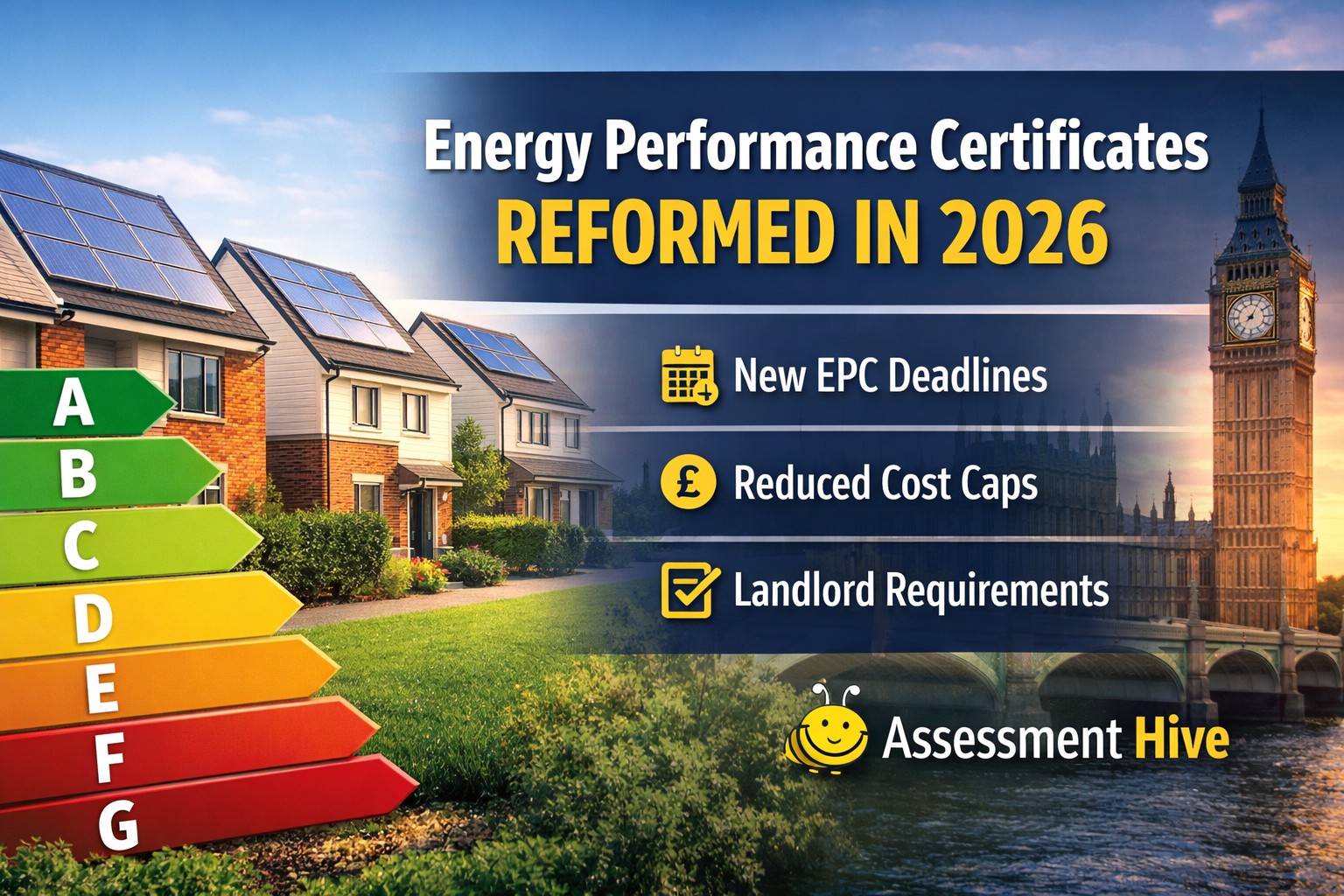
Energy Performance Certificates to Be Reformed in 2026 | EPC Changes Explained
Energy Performance Certificates (EPCs) are set to undergo their most significant reform in years. In 2026, the UK Government confirmed major changes to how EPCs are calculated, displayed, and used — alongside updated compliance deadlines for landlords.
If you own, manage, or develop property in the UK, these reforms will directly impact how you plan upgrades, manage compliance, and budget for energy efficiency improvements.
This guide explains what’s changing and how to prepare.
❓ Why Are EPCs Being Reformed?
The current EPC framework has faced criticism for being too simplistic and not accurately reflecting real-world energy performance. As a result, the UK Government has confirmed plans to modernise EPCs so they provide clearer, more practical information for homeowners, tenants, and landlords.
The reforms aim to:
-
Improve understanding of real energy costs
-
Encourage meaningful energy efficiency upgrades
-
Support the UK’s net-zero carbon targets
-
Align EPCs more closely with modern building standards
If you’re unfamiliar with how EPCs currently work, you can read our full guide here:
👉 Energy Performance Certificates (EPCs) Explained
📊 What Will the New EPC System Measure?
Under the proposed reforms, EPCs will move away from a single headline rating. Instead, they will assess properties using four key performance metrics:
-
Energy cost – estimated running costs
-
Fabric performance – insulation and heat retention
-
Heating system – efficiency of boilers or heat pumps
-
Smart readiness – ability to support smart energy technologies
This provides landlords and buyers with a clearer picture of how a property performs day-to-day — not just on paper.
🏘️ EPC Compliance Deadlines for Landlords (Confirmed)
One of the most important announcements affects landlords in the Private Rented Sector (PRS).
The Government has confirmed:
-
A single EPC compliance deadline of October 2030
-
All privately rented homes must meet the new standards by this date
-
The previously proposed 2028 deadline for new tenancies has been removed
While this gives landlords more time, it also places responsibility firmly on long-term planning rather than last-minute compliance.
 Read our full guide: MEES Compliance Service
💷 EPC Upgrade Cost Cap Reduced
To reflect rising construction and retrofit costs, the Government has also revised the proposed spending cap for landlords:
-
Maximum expected investment reduced from £15,000 to £10,000
-
The cap may be lower if £10,000 equals 10% or more of the property’s value
-
Energy improvements carried out from October 2025 onwards will count toward this cap
This means acting early can significantly reduce future compliance costs.
📄 What Happens to Existing EPCs?
If you already have a valid EPC, there’s no immediate requirement to replace it.
-
Existing EPCs will remain valid for their full 10-year lifespan
-
Reformed EPCs will be introduced gradually
-
Both systems will operate side-by-side during the transition
However, relying solely on an older EPC may not be enough when refinancing, selling, or expanding a rental portfolio.
🛠️ How Landlords Should Prepare Now
Although the EPC reforms formally arrive in 2026, preparation should begin well before then.
Landlords should:
-
Review current EPC ratings across their portfolio
-
Identify properties at risk of non-compliance
-
Focus on fabric-first upgrades (insulation, glazing, air tightness)
-
Budget improvements ahead of the 2030 deadline
-
Book EPC assessments early to avoid industry bottlenecks
Forward planning reduces risk, cost, and disruption.
🐝 How Assessment Hive Can Help
At Assessment Hive, we help landlords, agents, and developers stay compliant with confidence by providing:
-
Domestic & Commercial EPCs
-
SAP EPCs for new builds
-
MEES compliance advice
-
Energy efficiency improvement guidance
We offer fast, accurate, and fully accredited assessments nationwide.
 Call us on 020 7183 3240
 Email us at [email protected]
 Request Instant Quote → Click Here