SAP Calculations in Palmers Green: Extension Case Study
A homeowner in Palmers Green contacted Assessment Hive after Building Control requested further evidence of Part L compliance for a completed rear extension.
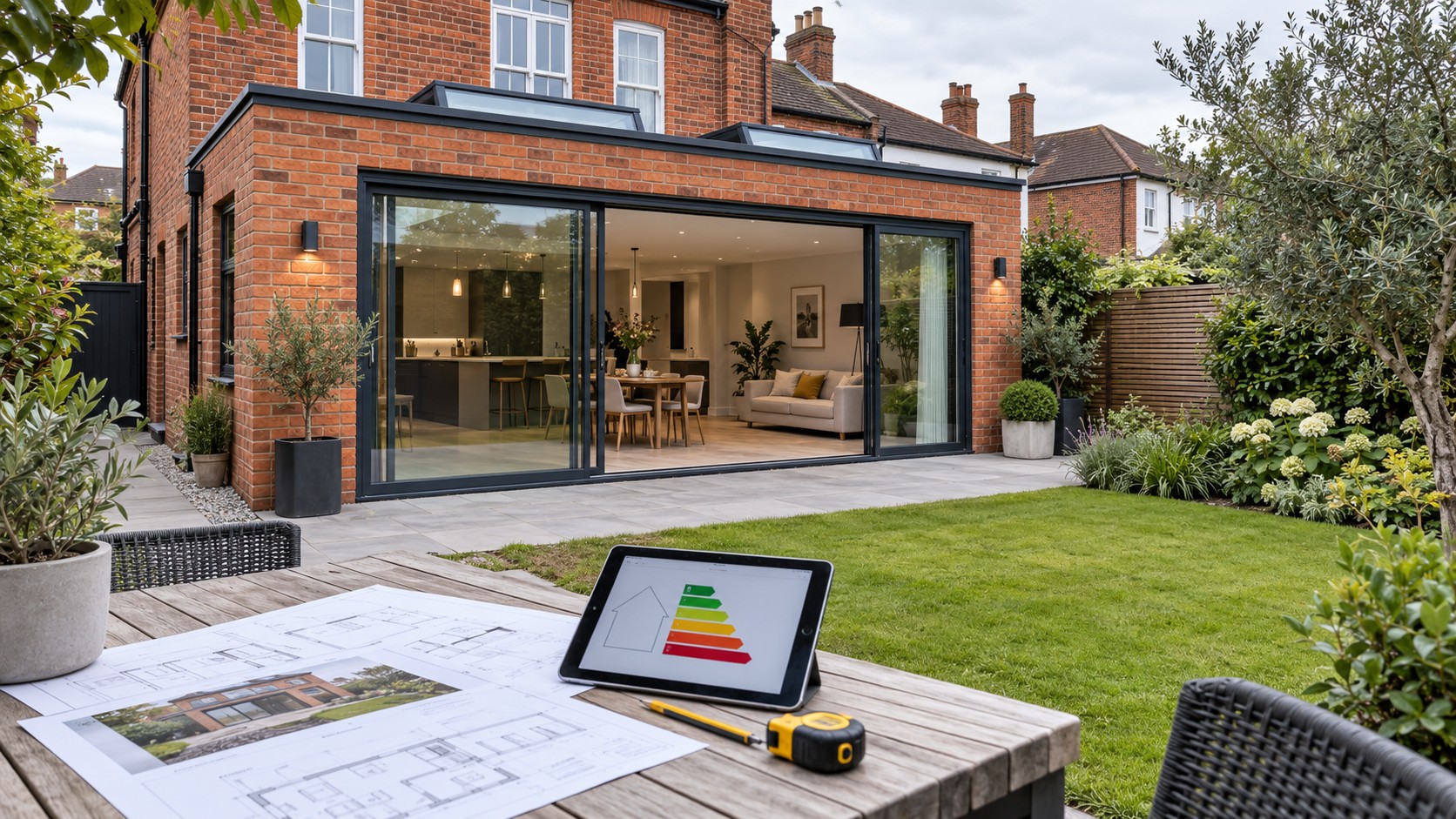
The property, located in the London Borough of Enfield, featured large sliding doors, rooflights and a new open-plan kitchen and living area. However, the project team had not arranged the necessary energy assessment during the design stage.
As a result, the homeowner faced a possible Building Control delay and could not progress their remortgage.
Assessment Hive reviewed the completed construction, consulted with the homeowner and coordinated with Building Control. We then identified a practical compliance solution that avoided removing the new glazing or undertaking extensive remedial work.
📋 Project Overview
Location: Palmers Green, London N13
Local authority: London Borough of Enfield
Project type: Single-storey rear extension
Assessment: SAP calculation for a highly glazed extension
Stage when instructed: Construction complete
Main challenge: Excessive glazing and insufficient roof insulation
Outcome: Part L compliance achieved without altering the glazing design
The new extension included:
- Large sliding doors
- Several rooflights
- An open-plan kitchen and living space
- Modern construction materials
- A glazing area exceeding 25% of the new extension’s floor area
Because the build had already finished, the homeowner had fewer options than they would have had during the design stage. Therefore, we needed to find a quick, affordable and technically acceptable solution.
⚠️ The Part L Compliance Problem
Approved Document L normally limits the area of new windows, rooflights and doors in a domestic extension.
As a general guideline, the total area of new openings should not exceed 25% of the extension floor area, plus an allowance for any existing openings that the extension covers.
The 25% figure does not create an automatic requirement for full SAP Calculations. However, where a design exceeds this allowance, the project must still demonstrate that the additional heat loss has received suitable compensation.
In this case, the extension included large areas of glazing. Furthermore, one section of the roof did not achieve the required insulation standard.
Together, these issues meant the project could not demonstrate compliance through the simplest elemental route.
The homeowner only discovered the problem after completing the construction work. Unfortunately, their builder had stopped responding, and the outstanding Building Control matter prevented progress with a remortgage.
For homeowners planning similar projects, our SAP Calculations for Extensions guide explains the available Part L compliance routes.
🏡 Why Highly Glazed Extensions Can Struggle to Comply
Large windows, sliding doors and rooflights can transform an extension. They create brighter rooms, connect the home to the garden and support modern open-plan layouts.
However, glazing normally loses more heat than an insulated wall or roof. Therefore, increasing the glazed area can increase the extension’s overall heat loss.
Common problems include:
- Sliding or bifold doors covering most of a rear elevation
- Several large rooflights
- Glazing with weak U-values
- Insufficient wall, floor or roof insulation
- Older parts of the original home performing poorly
- Changes from the approved construction specification
- Missing technical information or product evidence
Fortunately, exceeding the normal glazing allowance does not always mean the homeowner must reduce the window area.
A SAP assessor can compare the proposed extension and existing dwelling against a notional extension that follows the standard guidance. If the proposed design performs at least as well overall, Building Control may accept the alternative calculation.
This approach often allows homeowners to retain their preferred glazing design while making compensating improvements elsewhere.
🔍 Our Initial Review
When the homeowner contacted Assessment Hive, we first reviewed:
- The architectural drawings
- The extension dimensions
- The amount and type of glazing
- The wall, floor and roof construction
- The insulation installed
- The heating arrangements
- The existing dwelling
- The information requested by Building Control
- The stage reached by the remortgage
The review confirmed that the extension could not demonstrate compliance through the basic glazing and elemental checks alone.
In addition, one roof area lacked sufficient insulation. Consequently, simply modelling the extension without any further improvements would not have produced an acceptable result.
We explained the problem in plain language and discussed which parts of the property the homeowner could still improve without major disruption.
🧮 The SAP Calculation Method
We used SAP modelling to compare two scenarios.
The Notional Extension
First, we created a reference version of the extension that followed the normal Part L standards. This model included the permitted glazing allowance and compliant fabric specifications.
The notional calculation established the maximum acceptable heat loss for the extension project.
The Actual Extension
Next, we modelled the completed extension using its actual:
- Dimensions
- Glazing area
- Window and door performance
- Insulation levels
- Heating system
- Roof construction
- Wall and floor build-ups
We also included the relevant parts of the existing dwelling and the energy improvements that the homeowner had already completed.
The comparison then showed the remaining compliance shortfall.
For a broader explanation of when a project needs this type of assessment, read When Are SAP Calculations Required?.
✅ Our Compliance Solution
Rather than recommending the removal of the new sliding doors or rooflights, we looked for improvements that offered the greatest benefit with the least disruption.
1. Rapid Initial Assessment
We completed the initial SAP assessment within 24 hours of receiving the necessary information.
This quick turnaround gave the homeowner a clear understanding of the problem and prevented further uncertainty over their remortgage.
2. Review of Completed Improvements
During our consultation, the homeowner told us about energy-efficiency improvements they had already completed elsewhere in the property.
We reviewed those measures and included the relevant improvements within the calculation where suitable evidence supported them.
3. Two Practical Additional Improvements
The first calculation identified a remaining compliance gap. Therefore, we recommended two further improvements that the homeowner could install quickly and at a reasonable cost.
These measures compensated for the additional heat loss associated with the large glazed area and the roof issue.
Most importantly, the homeowner did not need to remove or reduce the new sliding doors and rooflights.
4. Coordination With Building Control
We communicated with the Building Control officer and explained the proposed assessment route.
This coordination confirmed what information Building Control needed and reduced the pressure on the homeowner. It also ensured that our final calculation addressed the outstanding compliance issue directly.
5. Final SAP Report
After the homeowner confirmed the agreed improvements, we updated the assessment and completed the final SAP documentation within two working days.
The report demonstrated that the completed project achieved an acceptable overall standard under Part L.
🎯 The Result
Our work produced the following outcome:
- Part L compliance achieved
- Building Control approval secured
- No need to remove the sliding doors or rooflights
- No extensive reconstruction required
- Final SAP documentation completed within two working days
- More than £1,200 in estimated alteration costs avoided
- The homeowner could progress their remortgage
- A stressful late-stage problem received a practical resolution
This project shows why SAP modelling can provide a valuable alternative compliance route for highly glazed extensions.
Although early assessment remains preferable, an experienced SAP assessor may still identify workable solutions when construction has already started or finished.
💬 Client Testimonial
“I had no idea I even needed SAP Calculations until Building Control mentioned it. Assessment Hive were brilliant—quick, clear and saved us from redesigning our whole extension.”
Sarah K., Palmers Green
🕒 Why Early SAP Advice Matters
The Palmers Green project reached a successful conclusion. Nevertheless, arranging the assessment during the design stage would have reduced the risk, pressure and uncertainty.
Early SAP advice allows homeowners and designers to:
- Check the glazing allowance before work begins
- Compare different window and rooflight arrangements
- Confirm insulation specifications
- Identify affordable compensating improvements
- Provide suitable information to Building Control
- Avoid changing completed construction
- Protect mortgage, remortgage and completion timescales
If an initial assessment shows a shortfall, the design team can normally compare several solutions. By contrast, completed projects often offer fewer practical options.
Our guide to What Happens If You Fail SAP Calculations? explains how assessors can resolve common compliance problems.
📍 SAP Calculations in Palmers Green and Enfield
Palmers Green forms part of the London Borough of Enfield. Assessment Hive supports homeowners, architects, builders and developers throughout Enfield and Greater London.
Typical projects include:
- Highly glazed residential extensions
- Loft and garage conversions
- New-build houses
- New apartment developments
- Residential subdivisions
- Commercial-to-residential conversions
- Changes of use that create new dwellings
We complete most SAP modelling remotely from drawings and specifications. Therefore, clients can receive fast support without waiting for a design-stage site appointment.
For complete London-wide information, visit our SAP Calculations London service page.
For projects elsewhere, our SAP Calculations UK guide explains the national requirements.
❓ Frequently Asked Questions
Do all extensions in Enfield need SAP Calculations?
No. Many extensions comply through the standard elemental requirements in Approved Document L. However, an alternative calculation may help where the design includes large areas of glazing or cannot meet the standard approach.
Does glazing above 25% automatically fail Part L?
No. The 25% guideline forms part of the standard method for assessing new openings in an extension. If the design exceeds that allowance, a SAP assessor may demonstrate compliance by comparing it with a compliant notional extension.
Can I keep my sliding doors and rooflights?
Possibly. SAP modelling may allow you to compensate for the additional heat loss through improvements to insulation, glazing, heating or other parts of the property. However, the assessor must review each project individually.
Can you help after construction has started?
Yes. Assessment Hive can review projects where construction has already started or finished. Nevertheless, acting early usually provides more options and lowers the risk of expensive remedial work.
Will my extension need a new EPC?
A standard extension to an existing home does not normally require a new EPC purely because of the building work. However, other circumstances may create a separate EPC requirement. We can confirm the correct documents after reviewing your project.
Can Assessment Hive speak with Building Control?
Yes. Where appropriate, we can explain the calculation method, answer technical queries and provide the information needed to support the submission.
How quickly can you complete the assessment?
Turnaround depends on the project and the information available. In this Palmers Green case, we completed the initial assessment within 24 hours and issued the final calculation within two working days after confirming the improvements.
📞 Do You Need SAP Calculations in Enfield or London?
Are you planning a highly glazed extension in Palmers Green, Enfield or elsewhere in London?
Alternatively, has Building Control requested SAP Calculations after your project started?
Send Assessment Hive your architectural drawings, construction details and Building Control correspondence. We will review the project and provide a clear, fixed-fee quotation.
📞 Call us on 020 7183 3240
📧 Email us at [email protected]
📝 Request Instant Quote → Click Here
Speak to an experienced SAP assessor before making expensive changes to your extension.