SAP Calculations for New Builds Complete UK Guide
When you’re planning a new build project, you must comply with Building Regulations Approved Document L. This compliance ensures your development remains energy efficient, environmentally responsible, and legally approved from the outset.
SAP Calculations (Standard Assessment Procedure) play a vital role in achieving this. Therefore, in this SAP Calculations for New Builds guide, we answer the most common questions and clearly explain how you can achieve compliance—step by step.
❓ What Are SAP Calculations?
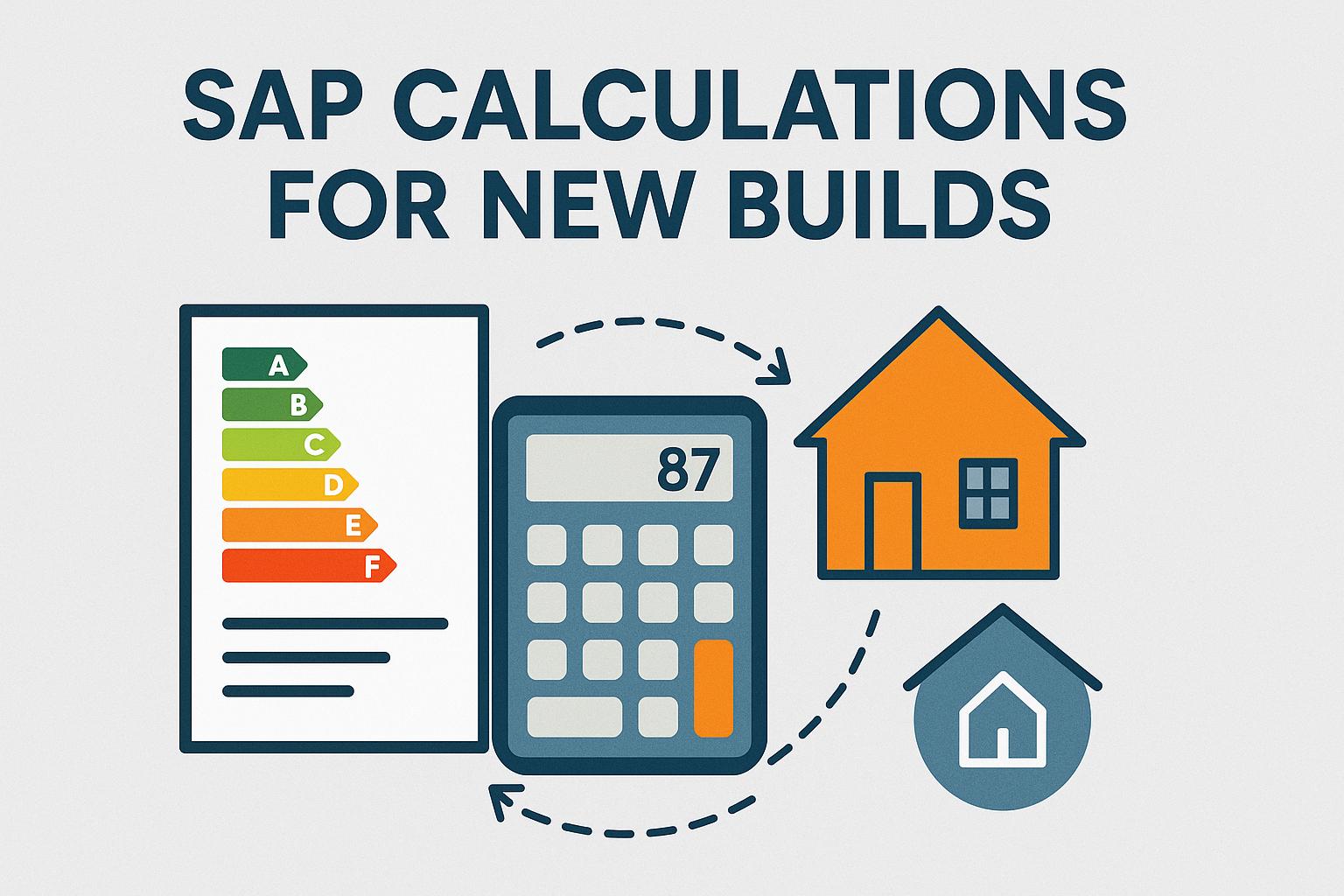
SAP Calculations measure the energy efficiency and CO₂ emissions of new residential properties using the government-approved Standard Assessment Procedure.
Consequently, Building Control and local authorities rely on SAP reports to confirm Part L compliance before they approve construction and issue completion certificates.
In addition, SAP Calculations clearly demonstrate that your project meets national energy performance standards.
You need SAP Calculations for:
-
New build houses and flats
-
Multi-unit residential developments
-
Self-build projects
-
Residential extensions and conversions
Helpful guides:
 Read our full guide: SAPs for Extensions
Read our full guide: SAPs for Conversions
📅 When Are SAP Calculations Required for New Builds?
SAP Calculations are mandatory for all new build dwellings. Moreover, you must complete them before construction begins.
They are required to:
-
Demonstrate compliance with Part L
-
Be submitted to Building Control
-
Generate an Energy Performance Certificate (EPC) on completion
Additionally, completing SAP Calculations early helps prevent costly redesigns later.
Read our full guide: When are SAP Calculations Required
⭐ Why Are SAP Calculations Important for New Builds?
SAP Calculations matter because they:
-
Ensure compliance with government energy standards
-
Reduce long-term energy bills
-
Improve EPC ratings
-
Increase property value and buyer appeal
-
Support low-carbon and sustainable construction
Ultimately, SAP Calculations help future-proof your development while avoiding compliance issues further down the line.
📄 What Information Is Needed for SAP Calculations?
To complete SAP Calculations accurately, we typically require the following information:
-
Architectural drawings, including plans, sections, and elevations
-
Construction specifications for walls, roofs, and floors
-
Heating and ventilation system details
-
Window and door specifications, including U-values and g-values
-
Renewable technology details, where applicable
-
Photographic evidence once construction finishes
Importantly, supplying full information at the outset significantly reduces delays.
Read our full guide: How to Prepare for SAP Calculations
⚙️ What Is the SAP Calculation Process?
We follow a clear and structured SAP process from design stage through to completion:
-
Submit Architectural Plans
First, we assess your drawings to model the property’s expected energy performance. -
Receive the SAP Compliance Pack (As Designed)
Next, you receive:-
BREL Report
-
SAP Calculations
-
Psi-values
-
U-value certificates
-
Predicted Energy Performance Certificate
-
-
Design Adjustments (If Required)
If the design does not meet compliance, we then recommend practical improvements. -
Building Control Submission
After that, you submit the reports to Building Control for approval. -
As Built Sign-Off
Finally, once construction finishes, you receive:-
As Built BREL Report
-
Final SAP Compliance Report
-
Official Energy Performance Certificate for Building Control sign-off
-
Read our full guide: SAP Calculations Process – New Builds
📑 What Documents Will I Receive?
📝 Design Stage Documents
At the design stage, you receive:
-
BREL Report
-
SAP Calculations
-
Psi-value certificates
-
U-value certificates
-
Predicted EPC
-
Part L Compliance Pack
🏁 As Built Documents
Once construction is complete, you receive:
-
Final BREL Report
-
As Built SAP Calculations
-
Final Energy Performance Certificate
⚠️ What Happens If My New Build Fails SAP Compliance?
If your project does not meet SAP compliance, we provide clear recommendations to improve energy performance. For example, these may include:
-
Increasing insulation levels
-
Upgrading heating and hot water systems
-
Adding renewable technologies, such as solar PV
In most cases, these changes quickly resolve compliance issues.
🔬 What Are Psi Calculations?
Psi-values measure heat loss at construction junctions, such as where walls meet floors or windows. They are expressed in W/mK (Watts per metre Kelvin).
Because junction heat loss can significantly impact overall performance, accurate Psi-values improve SAP results and support Part L compliance.
⏱️ How Long Do SAP Calculations Take?
The time required to complete SAP Calculations depends on the size, complexity, and readiness of your project. However, most new build projects follow a predictable timeline.
Typical SAP Calculation Timeframes
-
Simple single-dwelling new builds:
Typically completed within 2–4 working days, provided all details are available. -
More complex designs:
Properties with large glazed areas or renewable technologies usually take 4–7 working days. -
Multiple dwellings or developments:
Larger developments may take longer, particularly where multiple dwelling types exist.
Factors That Affect Turnaround Time
Several factors influence timescales, including:
-
Completeness of architectural drawings
-
Finalised construction specifications
-
Heating and renewable system details
-
Design changes required for compliance
-
Speed of responses to technical queries
Therefore, providing accurate information early helps keep timelines short.
As Designed vs As Built Timeframes
-
As Designed SAP Calculations:
Completed at the design stage and typically issued within a few working days. -
As Built SAP Calculations and EPC:
Completed after photographic evidence is provided and usually issued within 1–3 working days.
How to Speed Up the Process
To achieve the fastest turnaround:
-
Provide complete drawings and specifications
-
Confirm heating systems early
-
Respond quickly to clarification requests
-
Appoint a SAP assessor at the design stage
As a result, early involvement prevents last-minute compliance issues.
💷 How Much Do SAP Calculations Cost?
SAP Calculation costs vary depending on project size, number of dwellings, and design complexity. However, pricing remains transparent.
Our SAP Calculation fees start from just £49 + VAT, depending on project requirements.
Read our full guide: How Much Do SAP Calculations Cost?
👷 Who Can Carry Out SAP Calculations?
Only accredited SAP assessors can complete SAP Calculations. Moreover, they use government-approved software to ensure accuracy and compliance with Building Regulations.
📍 Where Can I Get SAP Calculations for My New Build?
You should arrange SAP Calculations early with an experienced assessor. By doing so, you reduce delays, avoid redesigns, and ensure smooth Building Control approval.
📞 Get Expert SAP Calculations for Your New Build Today
If you’re planning a new build and want fast, reliable, and fully compliant SAP Calculations, our experienced assessors are ready to help.
-
 Fast turnaround
 -
Competitive pricing
-
Remote, nationwide service


 Call us on 020 7183 3240
 Email us at [email protected]
 Request Instant Quote → Click Here