How Air Tightness Impacts SAP Calculations
Air tightness plays a crucial role in the energy performance of modern homes. In fact, uncontrolled air leakage can significantly affect SAP results and determine whether a dwelling complies with Building Regulations Part L.
For developers, architects and self-builders, understanding how air permeability influences SAP modelling helps prevent costly redesigns during construction.
In this guide, we explain how air tightness affects SAP Calculations, why airtight construction matters, and how air testing supports successful Building Control approval.
For a full overview of the compliance framework, see our main SAP Calculations UK guide.
🔍 What Is Air Tightness?
Air tightness describes how much uncontrolled air escapes through gaps within the building envelope.
These gaps often appear around:
-
Window and door frames
-
Electrical and plumbing penetrations
-
Wall-to-floor junctions
-
Roof connections
-
Loft hatches
-
Structural interfaces
Because heated air escapes through these gaps, energy demand increases. Consequently, poor airtightness raises predicted carbon emissions and negatively affects SAP performance.
As a result, air permeability forms an important input within SAP Calculations.
📊 How Air Tightness Affects SAP Calculations
SAP software uses air permeability assumptions to calculate heat loss through infiltration and ventilation.
When air leakage increases, the model predicts:
-
Higher heating demand
-
Increased carbon emissions
-
A higher Dwelling Emission Rate (DER)
Therefore, excessive air leakage can cause a design to fail compliance with Part L.
To understand how emissions targets work, read DER vs TER Explained.
📐 Air Permeability Targets in SAP
Air permeability measures how much air leaks through the building envelope under pressure. The measurement unit is m³/h/m² at 50 Pascals.
Typical SAP targets include:
| Building Type | Typical Target |
|---|---|
| Standard new build | 5 m³/h/m² |
| Improved performance | 3–4 m³/h/m² |
| High-performance / fabric-first | 1–3 m³/h/m² |
Lower values indicate better airtightness.
However, unrealistic design-stage assumptions can create problems. If the final air test result exceeds the SAP assumption, compliance margins may disappear.
Air permeability assumptions are calculated using SAP 10 methodology. See SAP 10 Explained for further detail.
🧱 Air Tightness and Fabric First Design
Modern building regulations promote a fabric-first approach. This strategy focuses on reducing heat loss through strong fabric performance before relying on renewable technologies.
Airtight construction works alongside:
-
High insulation levels
-
Reduced thermal bridging
-
Efficient glazing
-
Controlled ventilation systems
Because junction detailing influences both heat loss and air leakage, airtightness and thermal bridging often work together.
Airtightness forms a key part of fabric performance. To understand the wider strategy, see Fabric First Strategy in SAP Calculations and Thermal Bridging in SAP Calculations.
🏗 Why Air Tightness Matters for New Builds
For new build dwellings, SAP compliance depends on several performance indicators, including:
-
Dwelling Emission Rate (DER)
-
Primary Energy demand
-
Fabric Energy Efficiency (FEE)
When air leakage increases, heating demand rises. Consequently, DER increases and compliance becomes harder to achieve.
Therefore, developers should consider airtightness strategy early in the design process.
If you are planning a residential development, visit SAP Calculations for New Builds.
🏢 Air Tightness in Conversion Projects
Conversions often present additional challenges.
Older buildings frequently contain:
-
Solid masonry walls
-
Irregular junctions
-
Limited opportunities for airtight membranes
Therefore, realistic air permeability targets become essential.
For guidance on compliance strategies, see SAP Calculations for Conversions.
🏡 Air Tightness and Home Extensions
Although smaller extensions may not always require full SAP modelling, highly glazed extensions frequently do.
Because glazing increases heat loss, airtight installation becomes critical. Poorly sealed window junctions can quickly reduce compliance margins.
If you are planning an extension project, visit SAP Calculations for Extensions.
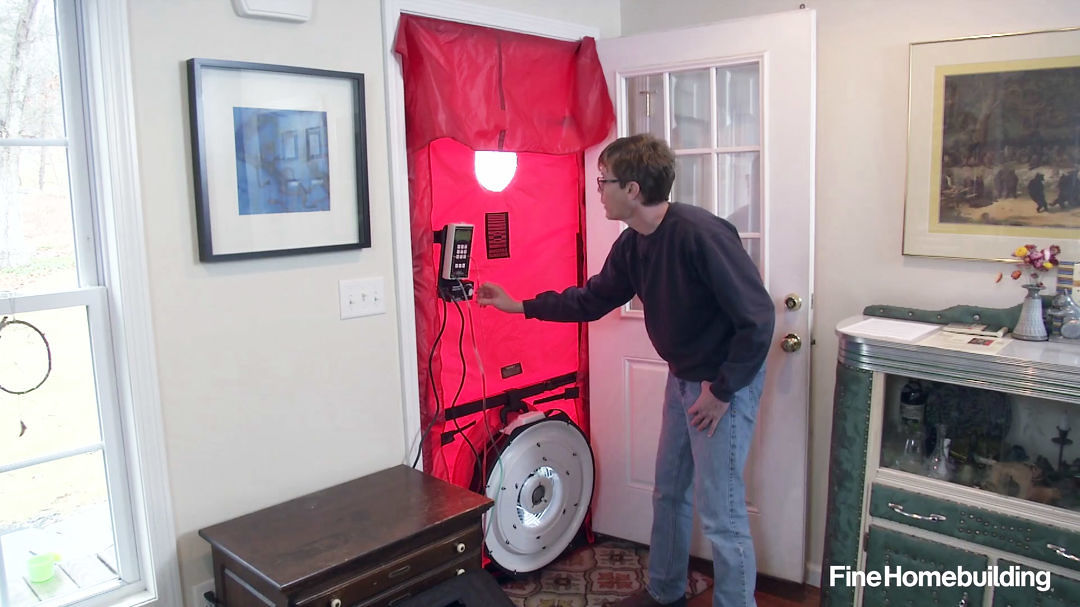
🔬 Air Tightness Testing
After construction finishes, new dwellings must undergo Air Tightness Testing to confirm that the building achieves its design-stage permeability target.
During testing:
-
A specialist fan installs within an external doorway
-
The equipment creates pressure differences
-
Air leakage rates are measured across the building envelope
The test result then feeds into the as-built SAP calculation.
If the measured value exceeds the design assumption, the project may fail Part L compliance.
For testing services, see Air Tightness Testing.
⚠ Common Air Tightness Problems
Air leakage usually occurs because of poor detailing or incomplete sealing during construction.
Typical causes include:
-
Unsealed service penetrations
-
Incomplete airtight membranes
-
Poorly installed windows
-
Gaps around loft hatches
-
Junction sealing errors
Therefore, good site supervision remains essential.
For additional compliance issues, read What Happens if you Fail SAP Calculations and Why Building Control Reject SAP Reports.
📈 How to Improve Air Tightness Performance
Fortunately, improving airtightness often requires straightforward construction practices.
For example:
-
Install continuous airtight membranes
-
Seal service penetrations carefully
-
Improve junction detailing
-
Use airtight electrical boxes
-
Ensure proper window sealing
When builders follow these steps early, SAP compliance margins usually improve.
For additional optimisation strategies, read How to Improve Your SAP Score Before Submission.
🏙 Air Tightness and London Developments
Urban developments often involve:
-
Higher glazing ratios
-
Dense building layouts
-
Limited construction tolerances
Because these factors increase heat loss risk, airtight construction becomes even more important.
For location-specific compliance guidance, see SAP Calculations London.
🧠 Final Thoughts
Air tightness plays a fundamental role in modern energy-efficient construction.
When developers address airtightness early, they can:
-
Improve SAP results
-
Reduce heating demand
-
Achieve stronger EPC ratings
-
Avoid compliance delays
Combined with strong insulation, controlled ventilation and reduced thermal bridging, airtight buildings deliver long-term comfort and lower energy bills.
❓ Frequently Asked Questions
What air tightness level is required for SAP?
Most new build dwellings target 5 m³/h/m² or lower. However, high-performance homes often achieve 3 m³/h/m² or better.
Can poor air tightness cause SAP failure?
Yes. If the final air test result exceeds the design-stage assumption used in SAP modelling, the dwelling may fail Part L compliance.
Do extensions require air tightness testing?
Not all extensions require testing. However, highly glazed extensions that require full SAP modelling may require an air permeability assessment.
Why is air tightness important in new homes?
Airtight homes reduce heat loss, improve energy efficiency, strengthen SAP compliance and lower long-term heating costs.
 Request a SAP Calculations UK Quote
Planning a new build, extension or conversion?
Contact Assessment Hive today. We will review your drawings, assess compliance risk and provide a clear, fixed-fee proposal.
-
 Fast turnaround
 -
 Competitive pricing
 -
 Remote, nationwide service
 Call us on 020 7183 3240
 Email us at [email protected]
 Request Instant Quote → Click Here